

How to Build a Resilient HTML Sanitization Pipeline for Syndicated Feeds

The Hidden Vulnerabilities Inside Ingested Syndicate Feeds

Syndicated feeds are often treated as structured data because RSS and Atom wrap content in predictable envelopes. The article body inside those envelopes is a different matter. Publishers may emit incomplete fragments, obsolete markup, inconsistent character encodings, tracking attributes, relative URLs, and HTML that browsers repair differently from server-side libraries. A feed can therefore be valid XML while its embedded content remains unsafe, ambiguous, or operationally difficult to store.

Persisting that content without transformation creates two classes of risk. Malicious markup can become persistent client-side execution when a downstream application renders it, while malformed content can pollute databases, break indexing jobs, corrupt previews, or produce inconsistent output across clients. Even modern automation and scraping environments expose this broader problem: engineering teams must account for edge cases such as headless browser rendering differentials, CDN Client Challenge flows, and partial DOM hydration, where execution environments and incomplete loading can distort what an ingestion worker receives or interprets. The dependable solution is a staged pipeline that parses HTML into a deterministic DOM, canonicalizes resource references, applies a strict policy, repairs the resulting tree, and serializes one controlled representation before storage.
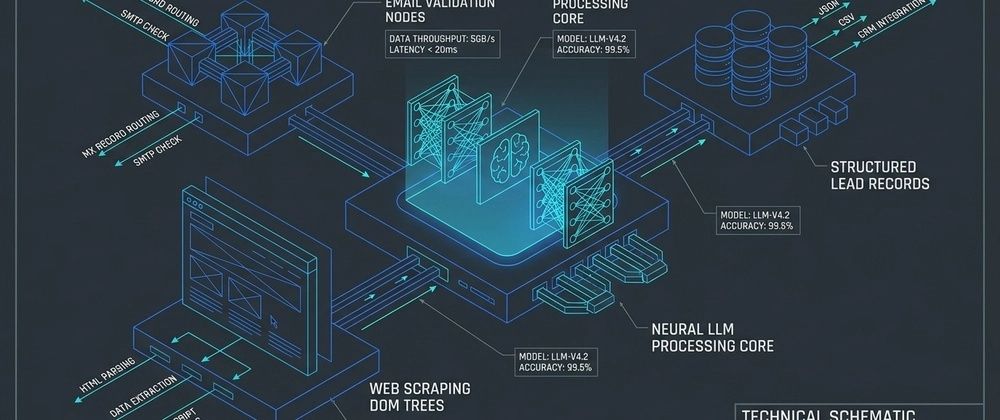
Technical schematic showing web scraping, neural processing, and structured records
Reliable feed ingestion depends on a sequence of controlled transformations that turns unpredictable source markup into safe, consistent application data.

Understanding Mutation XSS and Ingestion Edge Cases

Mutation Cross-Site Scripting, or mXSS, occurs when markup appears harmless at one stage but becomes executable after another parser changes its structure. Browsers are deliberately tolerant of malformed HTML. They may insert missing elements, close open elements, move nodes between namespaces, or reinterpret text according to whether it appears in normal, raw-text, or foreign-content parsing modes. A sanitizer that examines one interpretation and a browser that renders another have created a parser differential.

This is why string replacement and regular expressions are poor foundations for HTML security. HTML is nested, context-sensitive, and governed by tokenization rules that change according to the current element and insertion mode. Removing the substring script does not address event handlers, dangerous URLs, namespace confusion, malformed attributes, encoded characters, or a payload that becomes dangerous only after reparsing. Regex can be useful for simple whole-value checks, but it should not decide whether a tree of mixed content is safe.

Automated ingestion makes these weaknesses more difficult to reason about. A feed may pass through an XML parser, an HTML fragment parser, a sanitizer, a template engine, a database driver, and finally a browser. Each stage can decode entities, normalize characters, or repair structure. Research on mXSS has shown that parsing round trips, post-sanitization manipulation, and context changes can invalidate assumptions made earlier in the pipeline. Treat malformed input as an expected operating condition, not as an exceptional case.

  • Apply byte, character, nesting-depth, and node-count limits before parsing.
  • Use maintained parsers with standards-aligned HTML behavior rather than ad hoc tokenizers.
  • Sanitize the parsed DOM, not the original string, and avoid modifying the sanitized result with unsafe string operations.
  • Render using a consistent context and test the complete parse, sanitize, serialize, and reparse sequence.

Canonicalizing Link Traversal and Resolving Base URIs

URI handling must happen before policy decisions about links and embedded resources. A syndicated document can declare its origin in an HTTP response, a feed URL, an HTML base element, or an xml:base property. Nested Atom entries can also carry their own base information. The resolver should establish a documented precedence order, retain the effective source URI for diagnostics, and resolve every relative href and src against the correct document context.

Canonicalization is not merely a convenience for downstream clients. It prevents ambiguous paths from bypassing validation and makes deduplication, caching, auditing, and resource policy decisions reproducible. A URI is a structured identifier, and the concept is formally described by Uniform Resource Identifier. Validation should occur after parsing and normalization, while preserving the distinction between a normalized value and a security decision. Normalization alone does not make a URL safe.

  1. Determine the trusted document base from the fetch response and feed metadata, then apply permitted document-level base declarations.
  2. Resolve relative references according to standard URI resolution rules, including path segments, queries, fragments, and authority changes.
  3. Parse the resulting URI and allow only explicitly approved schemes, normally HTTP and HTTPS for remote content.
  4. Reject scriptable or ambiguous schemes such as javascript, data, and unsupported custom protocols unless a narrowly defined business requirement justifies them.
  5. Apply host, port, credential, redirect, and private-network controls when the ingestion service itself will fetch the resource.

Do not validate the raw attribute and then resolve it later. A harmless-looking relative value may resolve to an unexpected authority, while encoding and control characters can make textual comparisons unreliable. The robust approach is to parse, decode consistently, resolve, canonicalize, validate, and only then retain the attribute. If the reference fails policy, remove it or replace it with inert text rather than preserving an unusable value for a later component to interpret.

Constructing Strict Tag Allowlists and Attribute Filters

A blocklist asks whether known-dangerous elements should be removed. That strategy degrades as the HTML vocabulary, browser behavior, and application contexts expand. An allowlist defines the small subset of markup required by the product and rejects everything else by default. For a feed reader, that may include headings, paragraphs, lists, quotations, emphasis, code, tables, and carefully controlled links. Embedded media should be treated as a separate capability, not silently inherited from general article markup.

Attributes require the same discipline. Permit only attributes needed for presentation or semantics, then validate each according to its type. Remove all event-handler attributes, including onclick and onload, because they are executable code rather than ordinary metadata. Style is especially difficult: malformed declarations, browser-specific behavior, and URL-bearing CSS functions can create a second policy language inside the document. The simplest safe policy is to remove inline style entirely. If styling is necessary, map a small set of approved values to server-defined classes.

OWASP recommends combining context-aware output encoding, safe APIs, URL validation, and maintained HTML sanitization rather than relying on a single control. Libraries such as OWASP Java HTML Sanitizer can provide a strong implementation base, but configuration remains part of the security boundary. Keep the policy versioned, review changes as code, and patch the sanitizer and parser dependencies. Sanitized output must not be passed through a later transformation that reintroduces untrusted markup.

Content category Default policy Implementation concern
Structural text Allow a narrow set of headings, paragraphs, lists, and quotations Enforce nesting and remove unknown attributes
Links Allow anchor elements with validated HTTP or HTTPS URLs Remove event handlers and unsafe targets or apply safe relationship attributes
Images Allow only if product requirements justify remote loading Validate source URLs, dimensions, and loading behavior
Embedded media Reject by default or allow only approved providers Use provider and origin policies, never arbitrary frames or objects
Style and SVG Remove by default Both contain complex, context-sensitive attack surface

Separate policy decisions from parser mechanics. The parser should produce a tree; the policy engine should decide which nodes and attributes survive. This separation makes testing clearer and supports different output profiles, such as a plain feed preview, an email-safe representation, and a richer authenticated editor. It also prevents accidental policy drift when a parser library is upgraded.

Repairing Broken Hierarchies Before Persistent Storage

Sanitization is not complete if the surviving tree is still malformed. Use a deterministic HTML parser to resolve unclosed tags, illegal nesting, duplicate attributes, and entity handling before the result reaches the database. The historical intent behind WCAG parsing guidance emphasized complete tags, compliant nesting, unique identifiers, and predictable interpretation. Although the parsing criterion was removed from WCAG 2.2 because modern browsers and assistive technologies address many earlier concerns, inconsistent repair remains a practical interoperability and security problem.

mXSS demonstrates why repair order matters. If a sanitizer first inspects a raw fragment and a browser later applies a different repair algorithm, the stored payload can mutate during rendering. A safer sequence is to parse the fragment once with the selected algorithm, walk the resulting DOM, remove disallowed nodes and attributes, repair or discard invalid structures, serialize it, and reparse the serialized output in tests. The final representation should be the exact form that downstream renderers are expected to consume.

  • Flatten or remove unsupported namespaces and foreign-content elements unless they have a tested, explicit policy.
  • Drop duplicate attributes deterministically instead of relying on parser-specific precedence.
  • Remove duplicate or unsafe identifiers if the application uses IDs for navigation or scripting.
  • Handle nested anchors by repairing the structure, because HTML does not permit an anchor to contain another interactive anchor.
  • Decode and re-encode entities through the parser, never by chained string replacements.

Nested links deserve special attention in syndicated article cards. A publisher may wrap a title or excerpt in one link while including another link inside the same fragment. Browser parsers can split or rearrange those anchors, producing broken navigation and unpredictable keyboard behavior. The pipeline should choose a deterministic repair, such as preserving the first permitted link and converting conflicting nested links to text, or extracting them into sibling elements according to a documented schema. Do not rely on CSS or client-side scripts to repair invalid persisted markup.

Finally, serialize the cleaned DOM using one canonical serializer and store the result with metadata such as sanitizer policy version, parser version, source identifier, retrieval time, and content hash. Store raw input separately only when operational requirements demand it, protect that quarantine area, and never render it as trusted HTML. Canonical output improves cache keys, change detection, reprocessing, and incident investigation while reducing the chance that different services apply different repairs.

Ship Resilient Content Pipelines with Confidence

A resilient feed ingestion pipeline is a sequence of explicit trust-boundary decisions, not a single sanitization call. The practical checklist is straightforward:

  • Apply resource and complexity limits before parsing.
  • Parse feed envelopes and HTML fragments with maintained, deterministic parsers.
  • Resolve base declarations and convert relative references into canonical URIs.
  • Allow only approved schemes, hosts, tags, attributes, and media capabilities.
  • Remove event handlers, unsafe styles, foreign content, and unsupported interactive structures.
  • Repair the DOM, serialize canonical HTML, and record policy and parser versions.
  • Test the final serialized output in the same rendering contexts used by production clients.

Operational confidence comes from continuous testing. Maintain a corpus of malformed feeds, nested structures, unusual encodings, duplicate attributes, namespace transitions, and known XSS and mXSS payload families. Add property-based and fuzz testing that checks invariants such as “no executable attributes survive,” “all retained resource URLs use approved schemes,” and “a second parse does not materially change the tree.” Monitor rejection rates, parser failures, payload sizes, and policy violations without logging sensitive raw content.

External feeds should remain untrusted even when they come from long-standing partners. A zero-trust model makes that assumption visible in architecture: every source is parsed, normalized, validated, sanitized, and audited before its content becomes persistent application data. That discipline reduces security exposure, prevents malformed markup from spreading through caches and APIs, and gives downstream teams one predictable HTML contract to consume.
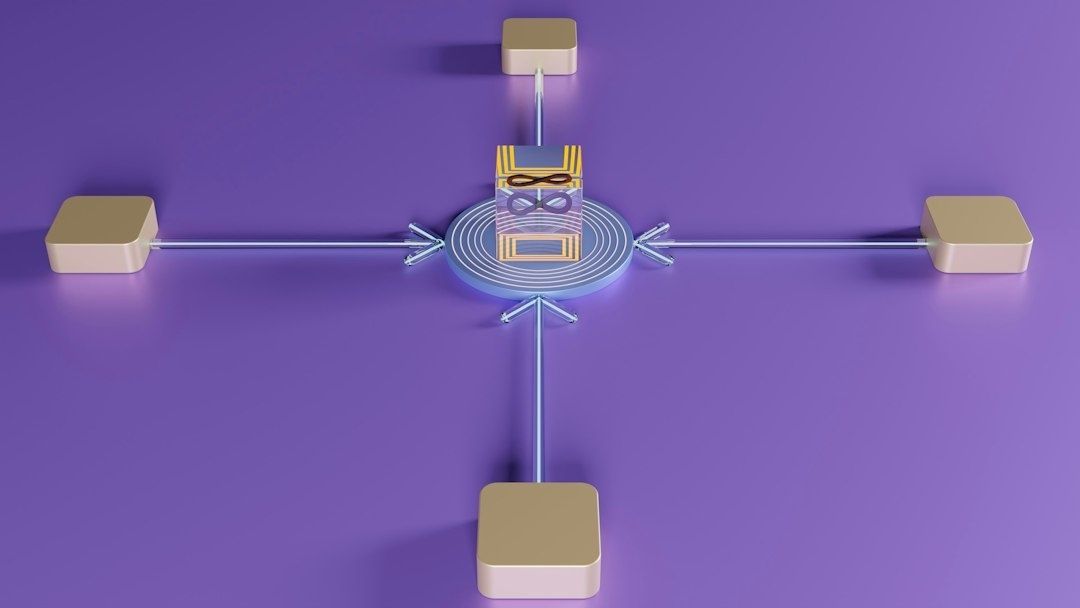

Moving from Polling to Push: WebSub Architectural Tradeoffs and Fallback Strategies

Rethinking Syndication Ingestion for High-Volume Feeds

Traditional feed ingestion is usually built around a scheduler, a fetch queue, and a parser. That model is straightforward, but its cost grows quickly. If a platform monitors hundreds of thousands of RSS or Atom feeds, even a modest polling interval creates a large volume of requests that return no new content. A large aggregator may need to schedule hundreds of checks per second simply to maintain acceptable freshness, while also enforcing per-host limits, handling slow publishers, and avoiding synchronized request spikes.

Polling also creates an unavoidable latency tradeoff. A short interval improves freshness but increases bandwidth, connection overhead, parser load, and pressure on publishers. A longer interval is cheaper and more polite, but new articles can remain invisible for minutes or hours. Teams building ingestion products, content monitoring services, and event-driven workflows increasingly look to push delivery as a way to move work closer to the moment a publisher changes its feed. The WebSub specification, originating from the PubSubHubbub initiative, defines a decentralized publish-subscribe mechanism intended to reduce wasted HTTP traffic while enabling near-real-time updates.

WebSub is not, however, a replacement for operational discipline. Push delivery introduces public callback endpoints, subscription state, cryptographic verification, retries, duplicate events, lease expiration, and dependencies on hubs that may fail without producing an obvious signal. Treating push as an all-or-nothing replacement for polling creates a new class of silent data-loss risks. The robust design is hybrid: use WebSub for low-latency delivery, then retain conditional polling as an automated safety net that verifies freshness and repairs gaps.

  • Use WebSub to reduce normal delivery latency and unnecessary fetches.
  • Acknowledge notifications quickly and process them through durable asynchronous infrastructure.
  • Retain conditional polling to detect silent hub failures, expired leases, and missed notifications.
  • Make deduplication, reconciliation, and replay explicit parts of the data model.

Deconstructing WebSub Mechanics Across Publishers, Hubs, and Subscribers

WebSub separates responsibilities among three roles. A publisher owns the topic, such as an RSS or Atom feed. A hub receives publication signals and distributes notifications to subscribers. A subscriber is the ingestion service that discovers the topic and hub, registers a callback URL, validates the subscription, and accepts subsequent deliveries. This separation allows publishers and subscribers to avoid maintaining direct polling relationships for every update, while hubs can distribute one publication event to many interested consumers.

Discovery normally begins with HTTP Link headers or links embedded in an XML or HTML representation. The publisher advertises a canonical topic URL and one or more hub URLs. The subscriber then sends a subscription request containing the callback URL, topic, mode, and optionally a requested lease duration and shared secret. The hub processes the request asynchronously and validates that the subscriber controls the callback by sending a challenge. The subscriber must return the challenge in the expected response, after which the hub can begin delivery. Subscription identity is tied to the topic and callback pair, so repeated requests should be handled idempotently rather than creating uncontrolled duplicate state.

Role Primary responsibility Important operational concern
Publisher Expose the topic and notify the hub when content changes Reliable discovery and accurate publication signals
Hub Validate subscriptions and distribute notifications Delivery retries, subscriber reachability, and lease state
Subscriber Discover, subscribe, verify, queue, and reconcile content Fast acknowledgement, idempotency, security, and fallback polling

Leases make subscription management a lifecycle problem rather than a one-time configuration task. A hub may grant a finite subscription duration, and the subscriber must renew before expiration. Renewal should be scheduled with a safety margin, persisted as state, and retried with exponential backoff. If a renewal handshake fails, the system should not assume that the old subscription remains active indefinitely. Multiple advertised hubs can provide redundancy, but they do not eliminate the need to track which hub accepted the subscription and when the lease was last confirmed. For a concise account of the protocol’s development from PubSubHubbub, consult this WebSub historical overview.

Managing Cryptographic Signatures and High-Throughput Handlers

A WebSub notification can include an HMAC signature generated from a shared secret and the exact request body. The receiver commonly obtains the signature from the X-Hub-Signature header, often with an algorithm prefix such as sha256=. The subscriber computes its own HMAC-SHA256 value over the raw bytes received and compares the result with the supplied value. This authenticates the sender and protects payload integrity, but it does not encrypt the content, so HTTPS remains necessary for confidentiality and transport security.

Raw-body handling is a frequent implementation failure. Framework middleware may parse JSON, normalize whitespace, change character encoding, or consume the request stream before verification. Signature computation must use the unmodified bytes. Secret storage should be handled through a managed secrets system, and rotation should support a controlled overlap period in which both the previous and replacement secret can be accepted. Every accepted notification still requires idempotent processing because delivery retries, network ambiguity, and hub behavior can produce duplicates.

  1. Receive the request over HTTPS and capture the raw body without transformation.
  2. Extract and parse the signature header, then compute the expected HMAC using the configured secret.
  3. Compare signatures with a constant-time function rather than a normal string comparison.
  4. Persist the verified envelope or enqueue it durably before returning a successful 2xx response.
  5. Perform parsing, normalization, deduplication, enrichment, and downstream publication in workers.

The endpoint should be deliberately small. It should authenticate the request, apply basic size and content-type checks, write an immutable delivery record or publish to a durable queue, and acknowledge promptly. Parsing malformed XML, downloading linked media, resolving redirects, calling external APIs, or calculating near-duplicate fingerprints does not belong on the synchronous request path. A queue such as Kafka or SQS provides buffering when publishers deliver bursts, while partitioning by feed or publisher can preserve useful ordering without forcing the entire platform into a single serial stream.

Engineer examining code on multiple monitors in a dark, red-lit workspace
A small, well-instrumented verification handler keeps untrusted deliveries away from the slower parsing and enrichment pipeline.

Constant-time comparison helps reduce timing side channels that could otherwise reveal information about the expected signature. It is not a substitute for authorization, rate limiting, replay controls, or secret protection. Delivery identifiers, body hashes, topic URLs, and arrival timestamps should be recorded so that duplicate notifications can be recognized and investigations can distinguish a rejected request from a successfully queued one. The practical objective is a handler that is secure at the edge and boring under load.

Addressing Production Vulnerabilities and Silent Hub Failures

The most dangerous push failure is often not an explicit error. A hub can enter a crash loop, lose connectivity to a publisher, suffer a network partition, or retain stale subscription state while returning apparently normal responses. From the subscriber’s perspective, the callback simply stops receiving notifications. If no independent freshness check exists, the ingestion system may continue reporting healthy HTTP endpoints while its content silently drifts behind the publisher.

Lease expiration creates a similar failure mode. A subscriber may believe that renewal was scheduled, while the request was rejected, timed out, or never reached the hub. Distributed workers can also disagree about subscription state if renewals are not coordinated. Store lease expiry, last successful renewal, hub identity, last notification, and last content observation as durable records. Alerting should be based on age and expected publisher behavior, not merely on whether the callback endpoint has received any traffic recently.

Push notifications also do not guarantee a clean global order. Multiple hub workers, retries, publisher nodes, and network paths can deliver events out of order. A later-arriving notification may describe an older feed representation, while a missed notification can leave the subscriber with an incomplete view. Pure event-driven ingestion is therefore insufficient for feeds whose current representation is the source of truth. The ingestion pipeline should fetch and reconcile the topic, use stable item identifiers where available, normalize URLs and timestamps, and apply content hashes or fingerprints to control duplicates.

  • Track notification age and compare it with the publisher’s historical update pattern.
  • Record every delivery attempt, verification result, queue result, and processing outcome.
  • Use idempotency keys based on item identifiers, canonical URLs, and content hashes.
  • Permit replay from durable envelopes when parsers or downstream consumers fail.
  • Separate transport health from content freshness, because an active callback does not prove current data.

Designing a Hybrid Fallback Architecture with Exponential Backoff

A resilient subscriber runs two coordinated channels. The primary channel receives WebSub notifications and rapidly schedules topic retrieval or processes the supplied representation, depending on the publisher’s delivery behavior. The secondary channel performs adaptive heartbeat polling. It does not poll every feed at a fixed aggressive interval. Instead, it checks whether the topic has remained fresh within an expected window and fetches only when the push signal appears late, the lease is near expiration, or reconciliation is due.

Conditional HTTP requests make this safety net practical. A subscriber stores the publisher’s ETag and Last-Modified values, then sends them with If-None-Match and If-Modified-Since on subsequent requests. A 304 Not Modified response confirms that the representation has not changed without transferring the full feed. Conditional requests do not remove connection and request overhead, so per-host concurrency limits, timeouts, caching, and jitter remain important, but they substantially reduce bandwidth and parser work compared with unconditional downloads.

Condition Recommended action Backoff behavior
Recent verified push and fresh topic Defer routine polling Use a long heartbeat interval with jitter
Push is late compared with publisher history Issue a conditional reconciliation request Increase frequency gradually if freshness is not restored
Lease approaching expiration Renew proactively and verify the challenge Retry with capped exponential backoff
Repeated hub or callback failures Continue polling and attempt alternate advertised hubs Open a circuit breaker for push while preserving fallback coverage
Active, healthy push traffic Use notifications as the freshness signal Step down polling frequency, but retain periodic verification

Backoff should be driven by evidence rather than a single global timer. A feed that historically publishes every few minutes deserves a tighter reconciliation window than a quarterly bulletin. Maintain rolling observations such as median inter-publication time, recent maximum gap, last successful push, last successful conditional fetch, and the age of the current representation. Add randomized jitter so thousands of feeds do not become synchronized after a scheduler restart. The simplest approach is fixed polling; the robust approach is conditional polling with exponential backoff; the scalable approach combines historical heuristics, host-level rate limits, and durable scheduling.

Circuit breakers provide the control loop. When verified push traffic is active and content remains current, the scheduler steps down fallback frequency. When notifications stop, renewals fail, or content age exceeds the expected threshold, the breaker moves toward recovery mode and increases conditional checks within safe limits. Repeated fetch failures should open a separate publisher circuit to prevent an unhealthy origin from consuming all worker capacity. Recovery should be gradual, with probe requests and capped concurrency rather than an immediate flood of retries.

  • Persist ETag and Last-Modified values with the feed’s normalized state.
  • Schedule renewal before lease expiry, with enough time for several retries.
  • Use topic-specific freshness thresholds derived from observed publication behavior.
  • Keep push and polling results in the same deduplication and reconciliation pipeline.
  • Measure the cost of fallback traffic so reliability improvements do not become an uncontrolled request surge.

Building Resilient Ingestion Pipelines for Unforgiving Production Environments

Polling offers operational simplicity and an independent verification path, but its latency and request volume become expensive at scale. WebSub reduces normal-path latency and avoids repeatedly asking unchanged publishers for data, yet it adds subscription lifecycle management, public endpoint security, queueing requirements, and dependence on hub behavior. The practical design does not choose between these models as if they were mutually exclusive. It assigns push to the low-latency path and conditional polling to verification, repair, and continuity.

A production-ready ingestor should make failure visible and recovery routine. The architecture should treat the database or durable event log as the source of truth, not the callback process or an in-memory scheduler. That allows operators to replay deliveries, rebuild normalized records, and distinguish a publisher outage from a parser regression.

  1. Discover canonical topics and hubs, then persist subscription and lease state.
  2. Verify signatures over raw request bodies using constant-time comparison.
  3. Acknowledge quickly after durable enqueueing, with idempotent delivery records.
  4. Parse, normalize, deduplicate, and reconcile asynchronously.
  5. Run adaptive conditional polling when push freshness, lease health, or hub behavior becomes uncertain.
  6. Monitor hub reachability, lease freshness, notification age, queue lag, verification failures, duplicate rates, and payload drops.

Long-term monitoring should focus on the gap between expected and observed content, not only on HTTP status codes. A callback that returns 2xx can still lose data after an unsafe enqueue, a worker crash, or a parser rejection. Freshness dashboards, per-publisher drift measurements, lease-expiry alerts, and sampled reconciliation checks provide the evidence needed to keep a high-throughput syndication system dependable as publishers, hubs, and traffic patterns change.