Deconstructing Web Feeds: How RSS and Atom Actually Structure Content

The Anatomy of Syndication Beyond Third-Party Parsers

Web feeds remain useful because they provide a direct, machine-readable pipeline from a publisher to an ingestion system. An aggregator can poll a source, retrieve a bounded XML document, extract newly published entries, and pass normalized records to a search index, event bus, warehouse, or notification service. That directness is valuable in systems where predictable retrieval matters more than algorithmic ranking. A feed is not merely a page with a few headlines. It is a contract, sometimes informal and sometimes formally specified, between a publisher and a consumer.

The difficulty begins when a parser library presents every source through the same convenient object model. A black-box abstraction may hide whether a value came from an RSS element, an Atom construct, a namespace extension, or a library-specific fallback. It may also silently coerce dates, discard duplicate links, merge content fields, or accept malformed markup inconsistently. Reliable ingestion therefore starts below the abstraction layer. RSS 2.0 is organized around a channel containing items and uses a relatively permissive extension model. Atom, specified by RFC 4287, defines namespaced feed and entry documents with more explicit identity, link, content, person, and date constructs. The difference is not cosmetic. It determines how a schema should be discovered, validated, normalized, and monitored.

Architectural Schemas and Structural Topologies

An RSS 2.0 document normally begins with an <rss> root element, often carrying a version attribute, followed by a single <channel>. Channel metadata describes the publication as a whole, while repeated <item> elements represent individual stories or resources. Common channel fields include <title>, <link>, and <description>. An item can contain a title, link, description, publication date, and globally unique identifier, but RSS permits considerable variation. In particular, an item is generally considered useful when it has at least a title or a description, which means an ingestion engine cannot assume that every source supplies the same minimum set.

Atom uses a different topology. A feed document is rooted directly at <atom:feed>, with entries represented by <atom:entry>. The namespace is normally declared as http://www.w3.org/2005/Atom, so the visible prefix may vary while the namespace URI remains the semantic identifier. Atom requires feed-level and entry-level metadata such as title and updated, and it gives identity a first-class role through atom:id. Links are also modeled as structured elements with attributes such as rel, type, and href, rather than being limited to a single text-valued link field.

The following comparison is useful when designing an intermediate schema. It should be treated as a mapping guide, not as permission to flatten every field without preserving its origin and semantics.

Concept RSS 2.0 Atom Normalization concern
Document root rss atom:feed or atom:entry Detect document type before selecting paths
Publication container channel feed Map separately from entry records
Content unit item entry Preserve source format and original XML
Stable identity Optional guid Required atom:id in entries Apply fallback identity only when necessary
Timestamp pubDate, often optional updated, with other date constructs possible Parse format-specific values before UTC conversion
Primary URL Text-valued link Structured link with attributes Choose links by relation and media type
Body description or content:encoded content or summary Track HTML, escaped text, and XHTML modes
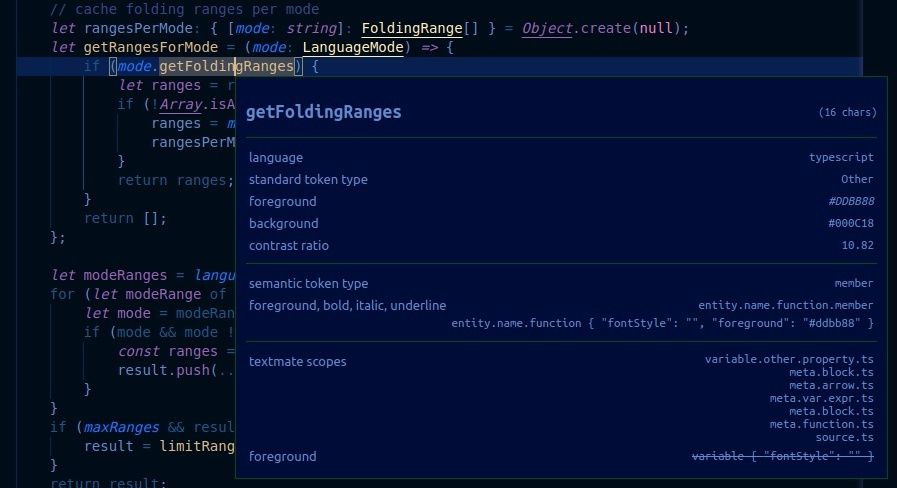
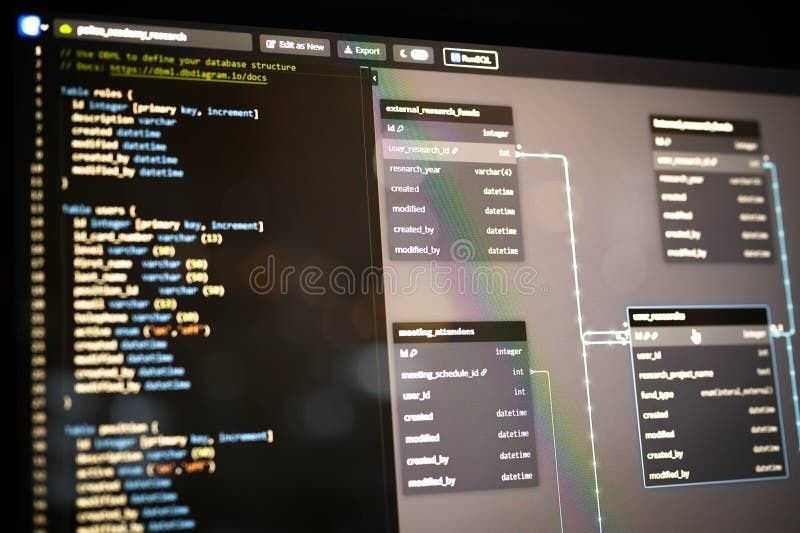
Code editor and database schema diagram displayed on a dark screen
A canonical schema creates a stable boundary between format-specific XML extraction and downstream indexing, storage, and event processing.

Atom”s formal grammar and construct rules are detailed in RFC 4287″s specification. Reading that document directly helps prevent a common design error: treating a convenient field name such as “published” or “url” as if it had identical meaning across formats. A robust normalizer retains raw values, source paths, and format metadata alongside the canonical fields. That makes later debugging possible when a publisher changes a template or when a library”s interpretation differs from the source document.

Taming the Chaos of Namespace Resolution

Namespaces are one of the most frequent causes of apparently empty XPath queries. In XML, a default namespace applies to unprefixed elements, so an Atom document containing <feed xmlns="http://www.w3.org/2005/Atom"> does not contain elements whose expanded names are simply feed. Their expanded name is {http://www.w3.org/2005/Atom}feed. The prefix used in the source is not part of the identity. A query that searches for feed without a namespace mapping will therefore return nothing even though the document visibly contains that element.

RSS adds another pattern. Core RSS elements may be unqualified, while extensions use namespaces such as Dublin Core or the Content module. A source might expose dc:creator, content:encoded, and Atom-like extensions in the same document. Prefixes can collide across documents, and publishers can choose different prefixes for the same URI. Code should consequently map stable namespace URIs to local query prefixes rather than trusting the lexical prefixes found in each feed.

  • Define a namespace dictionary from URI to an internal prefix, for example {"atom": "http://www.w3.org/2005/Atom"}.
  • Use fully qualified names such as {URI}entry when a direct, dependency-light lookup is sufficient.
  • Use an explicit mapping with XPath in ElementTree or lxml when queries span several namespaces.
  • Inspect the expanded tag name before assigning semantic meaning to an extension.
  • Keep namespace-aware extraction separate from text cleaning and HTML decoding.

Python”s ElementTree API represents namespaced tags using expanded names and supports custom prefix mappings for searches. lxml provides broader XPath support, incremental parsing, and structured parser diagnostics. A practical extractor can first inspect the root namespace, classify the document as RSS or Atom, and then use a format-specific mapping. Avoid registering a single global set of assumptions that treats every unqualified link or title as equivalent. Namespace scope is part of the schema, not incidental XML decoration.

Reconciling Divergent Temporal Formats

RSS commonly expresses publication time through pubDate, using a format derived from RFC 822 and RFC 1123. A typical value looks like Wed, 02 Oct 2002 13:00:00 GMT. Atom uses date constructs based on ISO 8601 and RFC 3339, such as 2003-12-13T18:30:02Z or 2003-12-13T18:30:02+01:00. Atom distinguishes fields such as published and updated, and its specification places particular importance on the meaning and comparison of these values.

Real feeds are less orderly than the specifications. Time zones may be omitted, abbreviations may be non-standard, and weekday names may contain spelling or locale variations. Some RSS publishers emit numeric offsets, while others use obsolete abbreviations or inconsistent capitalization. An absent offset is not evidence of UTC. The safest policy is to record the original string, apply a documented source policy for naive timestamps, and mark the resulting confidence rather than silently inventing precision.

  • Parse RSS dates with a tolerant RFC 822 or RFC 1123 parser, while validating the resulting calendar values.
  • Parse Atom dates as RFC 3339-compatible values and reject impossible offsets or dates.
  • Convert aware timestamps to UTC and store an integer or high-precision epoch representation.
  • Preserve the original timestamp and identify whether it was published, updated, or inferred.
  • Use retrieval time only as operational metadata, never as a replacement for source publication time.

A useful immutable pipeline is source text, parsed datetime, timezone resolution, UTC conversion, and canonical epoch output. Each stage should produce a new value or an explicit error record rather than mutating the original field. This prevents downstream jobs from repeatedly reinterpreting an ambiguous date. It also supports deterministic sorting, replay, watermarking, and change detection. When timestamps are missing, identity and payload hashes should carry more weight than a fabricated temporal value.

Building Resilient Ingestion Pipelines for Malformed Feeds

Feed ingestion must assume that transport metadata and document content can disagree. HTTP may declare one media type or character set while the XML declaration names another encoding. Historical feed deployments have frequently exposed this problem, particularly when documents are served as text/xml without a charset. A parser that receives already-decoded text may never see the original byte-level evidence and can corrupt non-ASCII content before XML parsing begins.

Reliability also requires separating strict validation from controlled recovery. Atom documents are required to be well-formed XML, but production aggregators often need to continue operating when a publisher emits truncated markup, invalid entities, or a broken extension. Recovery should never be invisible. The ingestion record should include parser warnings, source headers, byte length, retrieval time, and a content hash so that malformed input can be investigated and replayed.

  1. Preserve raw bytes first. Fetch the response as bytes, capture the HTTP status, content type, charset, compression details, and effective URL, then inspect the XML declaration before decoding. Apply a clear precedence policy for encoding signals and retain the original payload for replay.
  2. Parse incrementally and recover deliberately. Use a streaming interface such as ElementTree”s incremental tools for large documents, or lxml”s feed parser when controlled recovery and detailed error logs are required. Disable network access and unsafe external entity behavior for untrusted XML. Recovery flags should be enabled only under an explicit policy, with warnings attached to the resulting record.
  3. Deduplicate with layered identity. Prefer RSS guid and Atom id when present, but do not assume every GUID is a permanent URL or that every publisher uses it consistently. Combine source identity, canonical link, normalized title, timestamp, and a hash of the relevant payload. Store identity decisions so a later reprocessing run remains explainable.
  4. Emit one stable downstream payload. Publish a canonical record containing source URL, feed format, item identity, title, links, summary, content, authors, source timestamps, UTC timestamps, raw hash, parser status, and observed extensions. Send this record to the event bus or storage layer only after validation and deduplication are complete.

Idempotency should exist at more than one layer. A database constraint such as a unique key on source and item identity can protect storage, while an event producer can use the same deterministic key for partitioning or message de-duplication. If the source changes an item”s description without changing its identifier, the system should distinguish an update from a new publication. That requires retaining a version hash or content fingerprint and defining whether downstream consumers receive updates, immutable revisions, or both.

Observability completes the pipeline. Track fetch latency, response status, document size, parser failures, recovered errors, item counts, missing identity rates, timestamp parse failures, namespace patterns, and duplicate ratios by source. A sudden rise in empty entries or changed namespace URIs often signals feed drift before users report missing content. The most scalable architecture stores the raw payload in durable storage, emits normalized events, and performs enrichment or indexing in separate stages. This separation permits reprocessing when schema rules improve without repeatedly contacting the publisher.

Engineering Feeds for Long-Term Data Integrity

A dependable feed engine is built from explicit defenses rather than a single universal parser. Classify the document topology before extracting fields, resolve namespaces by URI, parse dates according to their source format, preserve raw bytes, and make recovery behavior visible. RSS and Atom can share a downstream record model, but they should not be forced through identical extraction paths when their XML structures and semantic rules differ.

  • Maintain format-specific parsers behind a shared canonical schema.
  • Keep raw XML, HTTP metadata, parser diagnostics, and normalization decisions.
  • Use deterministic identity and idempotent writes to make retries safe.
  • Convert timestamps to UTC while preserving their original meaning and text.
  • Monitor feed drift through metrics, fixtures, and regression tests built from real failures.

The next practical step is to assemble a corpus of representative feeds, including clean RSS, Atom with a default namespace, extension-heavy documents, encoding mismatches, duplicate entries, and malformed samples. Run that corpus through strict and recovery modes, compare canonical output, and make every ambiguity observable. Schema determinism does not mean pretending that the Web is uniform. It means defining predictable behavior when the Web is not. That approach removes the brittle points from syndication ingestion and gives downstream systems data they can trust over time.

Nicotine and Computer Programmers

It is fair to say that computers play a key role in the modern world. They have a vast amount of different applications. There is a rich history of computing as it has shaped the modern human era. However, these machines are still in their infancy. Institutions are creating new courses focused on training the next generation of software experts. One thing to bear in mind is that smoking will not be permitted in office environments where computers are used. Therefore fans of nicotine will need to find alternative methods.

Ex-smoker computer programmers should utilize the nicotine purveyor GotPouches if they are interested in pouches. They have already satisfied more than 50,000 customers worldwide. The site offers fast and convenient shipping. There is a wide range of different flavors and strengths available at very competitive prices.

A Better Choice

There are many reasons why pouches are better than traditional cigarettes. They are smokeless, meaning that the computer programmer could more easily get away with enjoying them whilst working. They will not cause unpleasant odors in the office or impact the health of co-workers. There are also financial implications to consider. The products available from GotPouches are very affordable. This is in contrast with more expensive cigarettes.

Why Women in the Computing Industry Should Exercise Regularly

Engaging in regular physical exercise and maintaining a healthy lifestyle is beneficial for everyone, regardless of their profession or gender. This includes women working in the computing field.

Combatting a Sedentary Lifestyle

Many computing jobs involve long seated hours, which is detrimental to physical health. Regular exercise helps to counter the adverse effects of prolonged sitting, reducing the risk of health issues such as obesity, cardiovascular diseases, and musculoskeletal problems. A good tip is to be in the right women”s sportswear such as sports pants during the workout. Other women”s sportswear to consider include bras and sneakers. This ensures maximum comfort.

Improved Concentration

Physical activity has been linked to improved cognitive function and concentration. Regular exercise may enhance mental clarity and problem-solving skills, which are crucial in computing.

Stress Reduction

The demands of computing jobs can be mentally taxing. Exercise is known to reduce stress levels by releasing endorphins, natural mood lifters.

Improved Energy Levels

Exercise improves overall energy levels and can help combat fatigue. This can lead to increased productivity.

Social Opportunities

Participating in group exercises or team sports can provide opportunities for networking and team building. Building strong professional relationships is valuable in the computing industry.

Longevity

Adopting a healthy lifestyle, including regular exercise, contributes to overall well-being and can lead to a longer and healthier career and life.

In a nutshell, physical activity among women in the computing field not only promotes individual well-being but contributes to a healthier and more productive work environment too. It’s essential to find a balance that suits individual preferences and schedules while considering the long-term health benefits.

Comfortable Clothing for Computing

In this modern world, a lot of people have jobs that rely heavily on computers. They will spend many hours of their work day sitting down at a desk. This is because computers serve a plethora of different functions. Whether the employee utilizes an intranet or extranet it is vital that they feel as comfortable as possible while sat down. This can be achieved by wearing the right clothing.

It is worth checking out the sport pants Aim’n offers on their website. Many of them are loose fit, making them ideal for any time of the year. Sportswear used to be only for the gym. However, the items available from Aim’n can be worn practically anywhere. They are certainly stylish enough for work environments. These affordable, high-quality products are available in several different cuts and sizes.

Comfort

When people think about starting with the basics of computing, they might imagine getting used to different forms of software. But actually, the learning process begins before they even turn the computer on. The very first thing to consider is the clothes that they wear. This will affect their long-term comfort and, therefore, their overall enjoyment levels.

In the past, offices had strict dress code policies. Luckily, this is no longer the case. IT workers have much greater freedom when it comes to their attire. It is perfectly acceptable to choose sportswear. Casual fashion appears to be growing in popularity within these environments. Aim’n is the best place to find these products.

How Older Women Can Find Augmentation Online

It is no secret that technology has changed the world in the last few decades. People around the globe have access to the internet. It has revolutionised society and allowed for greater communication and connectivity. On the other hand, members of earlier generations might feel left behind.

Older people can use their local library to learn the basics of using a computer. There may be classes that they can take. Eventually they will be able to surf the internet with ease.

Health

The sad fact is that when people age their health tends to decline. A fair percentage of women in their 80s are breast cancer survivors in need of reconstruction services. They could use Motiva Flora for this purpose.

It is an augmentation service that offers realistic looking implants. Motiva Flora has a magnet free port so that clients can undergo MRI scans more safely. This will be an important element for older people. Reinforced silicone is used in order to improve symmetry and prevent dislodgement. Inferior products of this type can run the risk of scar tissue and inflammation. Motiva Flora reduces these complications thanks to the soft surface of the implant.

Finding Motiva Online

Motiva has its own official website which is easily located by typing the company name into a search engine. The user could also research reviews from past customers. Doing so will give them insight into the products on offer. The site is available from both traditional computers and smart devices.

Introduction to Computers

What is a Computer?

A computer is an information processor or an electronic device that manipulates or processes raw information. It can store, process, and retrieve data. All computers have four main parts that combine and work together. These are input, memory, processing, and output.

The Four Parts of a Computer

  • Input: Two examples of input units are the mouse and keyboard; they pass information into your computer for processing. Other input types are the microphone and voice recognition software. They also convey information to the computer, which then processes it.
  • Memory/Storage: The information (documents and files) you enter on a computer are stored on the hard drive (HDD). This is a large magnetic memory that comes in different storage sizes. The amount of information a computer can hold depends on the size of its hard drive.
  • Processing: Every computer has a central processing unit (also known as the processor), a microchip placed inside the panel. When your computer starts to work, it becomes hot after a short time. This is why all computers use little fans to blow away heat from them to prevent overheating.
  • Output: Computers have LCD screens that display very detailed, high-resolution graphics. A stereo loudspeaker is another output device of a computer. It receives information and transmits it out as sounds. A permanent output type is an inkjet printer that delivers your information on blank paper.

History of Computers

If you look at computers from several definitions, the devices have been around for many years. An abacus is one of the ancient computers, a set of beads arrayed on alloy rods. To calculate numbers, users slide the beads back and forth. It was an introductory device, and people did not realize it was a computer compared to the types we have today.

Today’s concept about computers is the electronics that work around electricity. The first computer used a large amount of electricity to convert the voltage of vacuum tubes to power the device. These sets of computers were behemoths, occupying a whole building floor. They received instructions from punch cards, and only government facilities and wealthy universities could access them.

In 1960, the integrated circuit and transistor replaced the vacuum tube. These reduced power consumption, and by the standards we have today, these computers still look big. However, many institutions had more access to computing systems than ever before. In the late 1960s, the microchip was developed, which reduced the size of a computer further.

In the late 1970s, most businesses started using computers. This involves using a keyboard to type on a monitor terminal connected to a large central computer. Before not too long, the parts of computers became very small so that many people could own one in their home. This gave birth to a PC (also known as a Personal Computer) that almost everyone in the world can boast of today.

Types of Computers

There has undoubtedly been a wide range of computers offering different functions since the advent of the first one. Computer types are also in various sizes. The largest can occupy a large building and, the smallest is a microcontroller in embedded systems.

Here are the four basic types of computers.

Supercomputer

Supercomputers are the most powerful computers in the world in terms of performance and data processing. They are specialized, heavy-duty computers used for research and exploration purposes by large organizations. For instance, NASA launches shuttles and controls them for space exploration using supercomputers.

Supercomputers are extra-large, and a single one can occupy a large air-conditioned room. Some can even stretch through an entire building and, they are costly too. These computers are used for earthquake studies, weather forecasting, space exploration, and nuclear weapons testing.

Some in-demand supercomputers include the:

  • IBM Mira in the United States
  • IBM SuperMUC in Germany
  • IBM Sequoia in the United States
  • NUDT Tianhe-1A in China
  • Fujitsu K Computer in Japan

Mainframe Computer

Mainframes are another type of computer that is extremely costly but not as powerful as supercomputers. Government organizations and many large firms run their business operations on mainframes. Due to the sizes of the mainframe computers, they can also stand in large rooms with air conditioners.

Mainframes are fast computers with the ability to process and store a large amount of data. Insurance companies, banks, and educational institutions use mainframes to store the data of their policyholders, customers, and students, respectively. The sought-after mainframe computers are Hitachi Z800 and Fujitsu ICL VME.

Minicomputer

Minicomputers (also called Midrange Computers) are small machines without much processing and data storage ability. They are not designed for individual users but small businesses and firms for specific purposes. With the help of a minicomputer, a production department can monitor its process. Popular minicomputers include K-202, IBM Midrange computers, SDS-92, and Texas Instrument TI-990.

Microcomputer

Microcomputers are the fastest-growing computers that are widely used in the computing world. The computers are affordable and designed for general purposes such as educational studies, business development, entertainment, etc. Industry-leading manufacturers of microcomputers are Apple, Dell, Samsung, Toshiba, and Sony. Microcomputer types include desktop computers, notebooks, gaming consoles, smartphones, tablets, netbooks, calculators, and many more.

Computer Hardware

Hardware is the internal and external (or peripheral) physical components that a computer needs to function efficiently. It comprises everything that works together within or outside of a laptop or PC. Although hardware structure differs between laptops and PCs because they vary in size, the same core elements are in them.

While they function on both hardware and software, the hardware used will largely determine the speed of any computer system.

The Internal Hardware

All internal hardware of a computer is essential; however, let’s check out a few.

  • Motherboard: This is the crucial printed circuit board of a computer. It allocates power to other components, houses the CPU, and operates as a hub for additional hardware.
  • Central Processing Unit (CPU): The function of the CPU is to process all data from each program your computer runs.
  • Random Access Memory (RAM): The RAM is located in the memory slot of the motherboard, and it’s responsible for storing data.

Other internal hardware includes a video card, solid-state drive (SSD), hard drive (HDD), and more.

The Peripherals

The external hardware includes a monitor, mouse, keyboard, printer, speakers, image scanner, headphones, USB flash drives, and more.

Advantages of Computers for Individuals and Businesses

Gone are the days when a roundtable meeting, phone calls, filing cabinets, and letters are some of the ways we get things done. Without a doubt, computers have added a remarkable effect on businesses and people’s lives. Today, people don’t remember the days without the benefits of computers for educational purposes, entertainment, and business anymore.

Contemporarily, individuals and businesses have certain advantages they get from using a computer. These include the following.

Information Security

Keeping private information secure is easy today by using password-protected servers and software that eliminates viruses. Even with a password-protected computer, users’ data are safer than in the days of filing cabinets. A crucial advantage of a computer system is that it can save and backup information without the fear of losing a file.

Increased Connectivity

Computers have connected people beyond imagination in this contemporary age. The fact that an employee is not in the office is not an excuse for not being involved in crucial meetings. Some computer software and mobile apps are available for video/voice conference meetings. Computers enable students to perform their homework online and also grant employees access to work from home.

Speed and Accuracy

Performing numerous calculations, conducting transactions, research works, and communication can be accomplished very fast with a computer. With computers, everything happens quickly, taking less time than ever before. Instead of traveling around to pass information, people now use SMS, social media, and emails.

Entrepreneurial Opportunity

Computers have been helping people start a new business, which increases the number of entrepreneurs in the world. With a sales app, POS software, and the internet on your computer, you don’t need a physical office to be in business. Freelance marketplaces have also made it easier to hire freelancers and save money without hiring a full-time worker.

Computer Software

Software is a set of programs that helps a computer to carry out definite tasks. A program is a series of instructions written to solve a specific problem. Software exists in two forms; these are system software and application software.

System Software

System software is an arrangement of programs developed to run, regulate, and extend the processing abilities of a computer. Computer manufacturers are typically responsible for the creation of system software.

Each software product has programs written in low-level languages, interacting with the hardware at the fundamental level. System software operates as the interface between the end-users and the hardware. Examples of system software include Compilers, Operating Systems, Assemblers, Interpreters, etc.

Application Software

Application software products are made to fulfill an essential need of a particular area. Software designed in the computer laboratory can be referred to as Application Software. Some application software can consist of one program, just like a notepad designed for writing text.

Likewise, it may contain a software package, a collection of programs that works together to complete a specific function. Here are some examples of application software: Microsoft Office Suite software, payroll software, income tax software, and lots more