
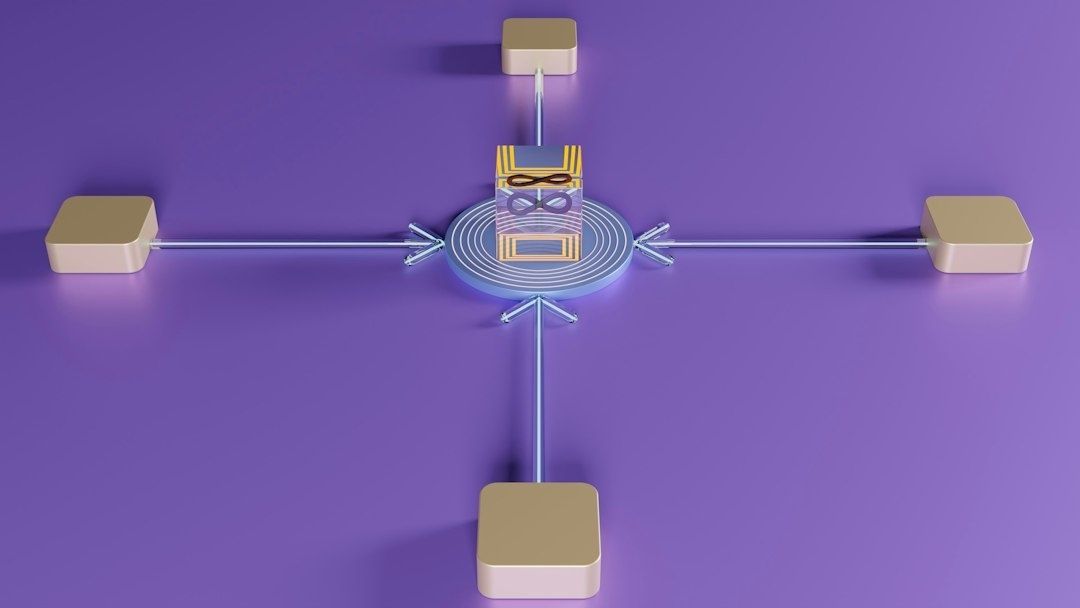
Moving from Polling to Push: WebSub Architectural Tradeoffs and Fallback Strategies
Rethinking Syndication Ingestion for High-Volume Feeds
Traditional feed ingestion is usually built around a scheduler, a fetch queue, and a parser. That model is straightforward, but its cost grows quickly. If a platform monitors hundreds of thousands of RSS or Atom feeds, even a modest polling interval creates a large volume of requests that return no new content. A large aggregator may need to schedule hundreds of checks per second simply to maintain acceptable freshness, while also enforcing per-host limits, handling slow publishers, and avoiding synchronized request spikes.
Polling also creates an unavoidable latency tradeoff. A short interval improves freshness but increases bandwidth, connection overhead, parser load, and pressure on publishers. A longer interval is cheaper and more polite, but new articles can remain invisible for minutes or hours. Teams building ingestion products, content monitoring services, and event-driven workflows increasingly look to push delivery as a way to move work closer to the moment a publisher changes its feed. The WebSub specification, originating from the PubSubHubbub initiative, defines a decentralized publish-subscribe mechanism intended to reduce wasted HTTP traffic while enabling near-real-time updates.
WebSub is not, however, a replacement for operational discipline. Push delivery introduces public callback endpoints, subscription state, cryptographic verification, retries, duplicate events, lease expiration, and dependencies on hubs that may fail without producing an obvious signal. Treating push as an all-or-nothing replacement for polling creates a new class of silent data-loss risks. The robust design is hybrid: use WebSub for low-latency delivery, then retain conditional polling as an automated safety net that verifies freshness and repairs gaps.
- Use WebSub to reduce normal delivery latency and unnecessary fetches.
- Acknowledge notifications quickly and process them through durable asynchronous infrastructure.
- Retain conditional polling to detect silent hub failures, expired leases, and missed notifications.
- Make deduplication, reconciliation, and replay explicit parts of the data model.
Deconstructing WebSub Mechanics Across Publishers, Hubs, and Subscribers
WebSub separates responsibilities among three roles. A publisher owns the topic, such as an RSS or Atom feed. A hub receives publication signals and distributes notifications to subscribers. A subscriber is the ingestion service that discovers the topic and hub, registers a callback URL, validates the subscription, and accepts subsequent deliveries. This separation allows publishers and subscribers to avoid maintaining direct polling relationships for every update, while hubs can distribute one publication event to many interested consumers.
Discovery normally begins with HTTP Link headers or links embedded in an XML or HTML representation. The publisher advertises a canonical topic URL and one or more hub URLs. The subscriber then sends a subscription request containing the callback URL, topic, mode, and optionally a requested lease duration and shared secret. The hub processes the request asynchronously and validates that the subscriber controls the callback by sending a challenge. The subscriber must return the challenge in the expected response, after which the hub can begin delivery. Subscription identity is tied to the topic and callback pair, so repeated requests should be handled idempotently rather than creating uncontrolled duplicate state.
| Role | Primary responsibility | Important operational concern |
|---|---|---|
| Publisher | Expose the topic and notify the hub when content changes | Reliable discovery and accurate publication signals |
| Hub | Validate subscriptions and distribute notifications | Delivery retries, subscriber reachability, and lease state |
| Subscriber | Discover, subscribe, verify, queue, and reconcile content | Fast acknowledgement, idempotency, security, and fallback polling |
Leases make subscription management a lifecycle problem rather than a one-time configuration task. A hub may grant a finite subscription duration, and the subscriber must renew before expiration. Renewal should be scheduled with a safety margin, persisted as state, and retried with exponential backoff. If a renewal handshake fails, the system should not assume that the old subscription remains active indefinitely. Multiple advertised hubs can provide redundancy, but they do not eliminate the need to track which hub accepted the subscription and when the lease was last confirmed. For a concise account of the protocol’s development from PubSubHubbub, consult this WebSub historical overview.
Managing Cryptographic Signatures and High-Throughput Handlers
A WebSub notification can include an HMAC signature generated from a shared secret and the exact request body. The receiver commonly obtains the signature from the X-Hub-Signature header, often with an algorithm prefix such as sha256=. The subscriber computes its own HMAC-SHA256 value over the raw bytes received and compares the result with the supplied value. This authenticates the sender and protects payload integrity, but it does not encrypt the content, so HTTPS remains necessary for confidentiality and transport security.
Raw-body handling is a frequent implementation failure. Framework middleware may parse JSON, normalize whitespace, change character encoding, or consume the request stream before verification. Signature computation must use the unmodified bytes. Secret storage should be handled through a managed secrets system, and rotation should support a controlled overlap period in which both the previous and replacement secret can be accepted. Every accepted notification still requires idempotent processing because delivery retries, network ambiguity, and hub behavior can produce duplicates.
- Receive the request over HTTPS and capture the raw body without transformation.
- Extract and parse the signature header, then compute the expected HMAC using the configured secret.
- Compare signatures with a constant-time function rather than a normal string comparison.
- Persist the verified envelope or enqueue it durably before returning a successful 2xx response.
- Perform parsing, normalization, deduplication, enrichment, and downstream publication in workers.
The endpoint should be deliberately small. It should authenticate the request, apply basic size and content-type checks, write an immutable delivery record or publish to a durable queue, and acknowledge promptly. Parsing malformed XML, downloading linked media, resolving redirects, calling external APIs, or calculating near-duplicate fingerprints does not belong on the synchronous request path. A queue such as Kafka or SQS provides buffering when publishers deliver bursts, while partitioning by feed or publisher can preserve useful ordering without forcing the entire platform into a single serial stream.

Constant-time comparison helps reduce timing side channels that could otherwise reveal information about the expected signature. It is not a substitute for authorization, rate limiting, replay controls, or secret protection. Delivery identifiers, body hashes, topic URLs, and arrival timestamps should be recorded so that duplicate notifications can be recognized and investigations can distinguish a rejected request from a successfully queued one. The practical objective is a handler that is secure at the edge and boring under load.
Addressing Production Vulnerabilities and Silent Hub Failures
The most dangerous push failure is often not an explicit error. A hub can enter a crash loop, lose connectivity to a publisher, suffer a network partition, or retain stale subscription state while returning apparently normal responses. From the subscriber’s perspective, the callback simply stops receiving notifications. If no independent freshness check exists, the ingestion system may continue reporting healthy HTTP endpoints while its content silently drifts behind the publisher.
Lease expiration creates a similar failure mode. A subscriber may believe that renewal was scheduled, while the request was rejected, timed out, or never reached the hub. Distributed workers can also disagree about subscription state if renewals are not coordinated. Store lease expiry, last successful renewal, hub identity, last notification, and last content observation as durable records. Alerting should be based on age and expected publisher behavior, not merely on whether the callback endpoint has received any traffic recently.
Push notifications also do not guarantee a clean global order. Multiple hub workers, retries, publisher nodes, and network paths can deliver events out of order. A later-arriving notification may describe an older feed representation, while a missed notification can leave the subscriber with an incomplete view. Pure event-driven ingestion is therefore insufficient for feeds whose current representation is the source of truth. The ingestion pipeline should fetch and reconcile the topic, use stable item identifiers where available, normalize URLs and timestamps, and apply content hashes or fingerprints to control duplicates.
- Track notification age and compare it with the publisher’s historical update pattern.
- Record every delivery attempt, verification result, queue result, and processing outcome.
- Use idempotency keys based on item identifiers, canonical URLs, and content hashes.
- Permit replay from durable envelopes when parsers or downstream consumers fail.
- Separate transport health from content freshness, because an active callback does not prove current data.
Designing a Hybrid Fallback Architecture with Exponential Backoff
A resilient subscriber runs two coordinated channels. The primary channel receives WebSub notifications and rapidly schedules topic retrieval or processes the supplied representation, depending on the publisher’s delivery behavior. The secondary channel performs adaptive heartbeat polling. It does not poll every feed at a fixed aggressive interval. Instead, it checks whether the topic has remained fresh within an expected window and fetches only when the push signal appears late, the lease is near expiration, or reconciliation is due.
Conditional HTTP requests make this safety net practical. A subscriber stores the publisher’s ETag and Last-Modified values, then sends them with If-None-Match and If-Modified-Since on subsequent requests. A 304 Not Modified response confirms that the representation has not changed without transferring the full feed. Conditional requests do not remove connection and request overhead, so per-host concurrency limits, timeouts, caching, and jitter remain important, but they substantially reduce bandwidth and parser work compared with unconditional downloads.
| Condition | Recommended action | Backoff behavior |
|---|---|---|
| Recent verified push and fresh topic | Defer routine polling | Use a long heartbeat interval with jitter |
| Push is late compared with publisher history | Issue a conditional reconciliation request | Increase frequency gradually if freshness is not restored |
| Lease approaching expiration | Renew proactively and verify the challenge | Retry with capped exponential backoff |
| Repeated hub or callback failures | Continue polling and attempt alternate advertised hubs | Open a circuit breaker for push while preserving fallback coverage |
| Active, healthy push traffic | Use notifications as the freshness signal | Step down polling frequency, but retain periodic verification |
Backoff should be driven by evidence rather than a single global timer. A feed that historically publishes every few minutes deserves a tighter reconciliation window than a quarterly bulletin. Maintain rolling observations such as median inter-publication time, recent maximum gap, last successful push, last successful conditional fetch, and the age of the current representation. Add randomized jitter so thousands of feeds do not become synchronized after a scheduler restart. The simplest approach is fixed polling; the robust approach is conditional polling with exponential backoff; the scalable approach combines historical heuristics, host-level rate limits, and durable scheduling.
Circuit breakers provide the control loop. When verified push traffic is active and content remains current, the scheduler steps down fallback frequency. When notifications stop, renewals fail, or content age exceeds the expected threshold, the breaker moves toward recovery mode and increases conditional checks within safe limits. Repeated fetch failures should open a separate publisher circuit to prevent an unhealthy origin from consuming all worker capacity. Recovery should be gradual, with probe requests and capped concurrency rather than an immediate flood of retries.
- Persist ETag and Last-Modified values with the feed’s normalized state.
- Schedule renewal before lease expiry, with enough time for several retries.
- Use topic-specific freshness thresholds derived from observed publication behavior.
- Keep push and polling results in the same deduplication and reconciliation pipeline.
- Measure the cost of fallback traffic so reliability improvements do not become an uncontrolled request surge.
Building Resilient Ingestion Pipelines for Unforgiving Production Environments
Polling offers operational simplicity and an independent verification path, but its latency and request volume become expensive at scale. WebSub reduces normal-path latency and avoids repeatedly asking unchanged publishers for data, yet it adds subscription lifecycle management, public endpoint security, queueing requirements, and dependence on hub behavior. The practical design does not choose between these models as if they were mutually exclusive. It assigns push to the low-latency path and conditional polling to verification, repair, and continuity.
A production-ready ingestor should make failure visible and recovery routine. The architecture should treat the database or durable event log as the source of truth, not the callback process or an in-memory scheduler. That allows operators to replay deliveries, rebuild normalized records, and distinguish a publisher outage from a parser regression.
- Discover canonical topics and hubs, then persist subscription and lease state.
- Verify signatures over raw request bodies using constant-time comparison.
- Acknowledge quickly after durable enqueueing, with idempotent delivery records.
- Parse, normalize, deduplicate, and reconcile asynchronously.
- Run adaptive conditional polling when push freshness, lease health, or hub behavior becomes uncertain.
- Monitor hub reachability, lease freshness, notification age, queue lag, verification failures, duplicate rates, and payload drops.
Long-term monitoring should focus on the gap between expected and observed content, not only on HTTP status codes. A callback that returns 2xx can still lose data after an unsafe enqueue, a worker crash, or a parser rejection. Freshness dashboards, per-publisher drift measurements, lease-expiry alerts, and sampled reconciliation checks provide the evidence needed to keep a high-throughput syndication system dependable as publishers, hubs, and traffic patterns change.
By Magnus
- 10, Nov, 2026
- 0 Comments